























Do you remember Newton’s law of Gravity? – It says, “Everything falls due to the gravitational force of the earth.”
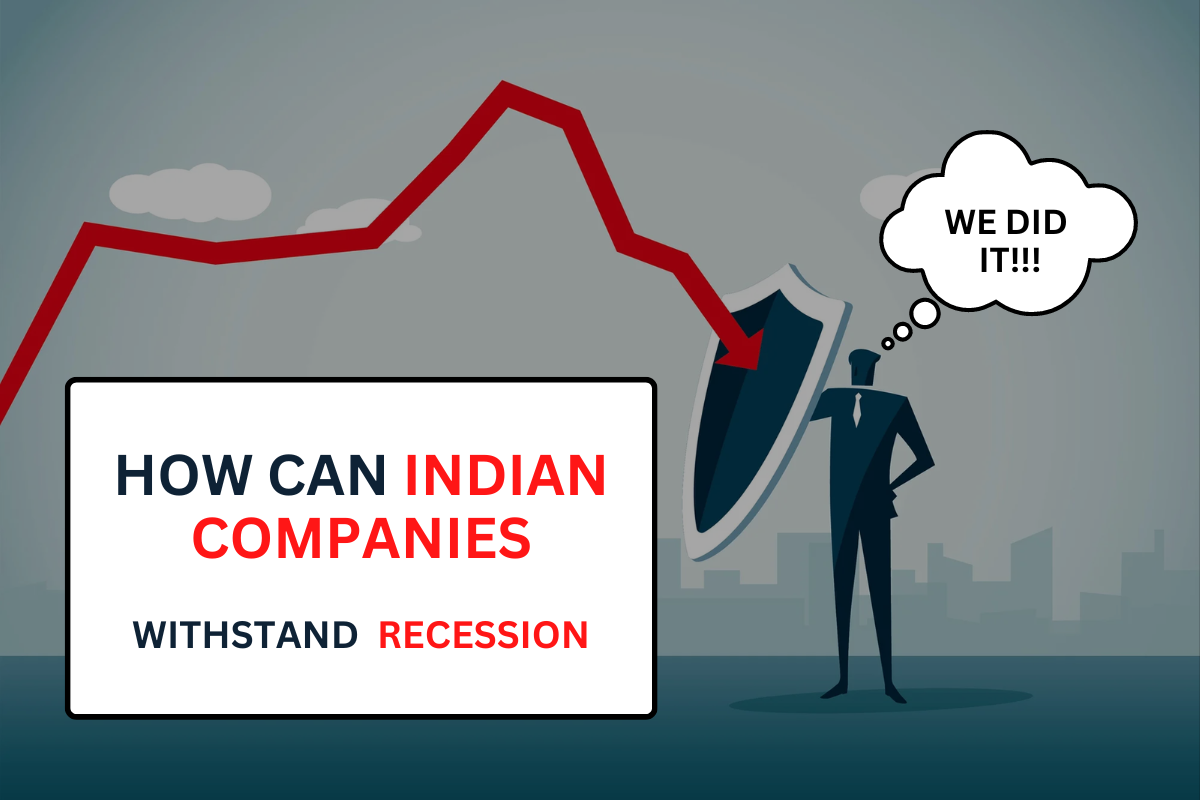
This is not limited to only physics but also applies to the economy. Wherein, a period of economic growth is at some point followed by a period of decline. If this decline continues for several months, it will be called a recession. This is a phase where a business's survival falls at risk. Along with this, we will notice unemployment rises, customers reduce, and earnings drop.
Harry Truman once said, "If your neighbor gets laid off, it's a recession. If you get laid off, it's a depression".
Recession in India
We are nowhere for Recession in India in this financial year, 2022 . A recent survey by Bloomberg reported that India has zero chance of entering into a recession. Though the country faced the strongest economic crisis in the pandemic, the government and reserve bank of India formulated the right plans to overcome all those.
What is Recession Planning?
A recession is something that we cannot predict and plan for. Though it strikes and continues for a few months, we cannot predict the effect of the recession. Growing companies have the chance of a recession hitting harder than established companies.
No matter how the recession in India impacts the business, preparing for it well in advance is the key. Devising a strong response plan maps out the steps a business can take to be sustainable.
Recession planning is to sustain the recession period by brainstorming possible scenarios. To be specific, consider a case where recession plays its highest role, the time when we can cut back the operating costs and how much we can cut down, etc. A recession plan also helps companies to prepare for certain scenarios like
What can we do if a potential client goes bust?
What if the recession in India takes its charge longer than planned or expected?
Recession planning is not limited to sustaining the business. A well-thought-out recession plan provides the trigger points or metrics that signal to take the action.
What happens to start-ups during a recession?
The last decade has shown the highest boom for tech industries. The covid-19 pandemic and oil wars took a turn for national and international markets' worst trading since 2008. Many believed that this is a sign of a recession in India in 2022. In these assumptions, the most heard word is How startups and recession work together. There evolved whole negativity that start-ups face a lot of risks and volatility. But, we say that this isn’t true.
Ways a start-up can survive a Potential Recession
For a start-up company to prepare for a recession may be a bit difficult as they first need to understand the economic stagnation. We have listed a few tips that may help start-up companies to help in preparing for the recession outbreaks.
1. Understand what your product means to the consumer
It is your product or service that speaks to your customers before you do. So, your potential customers tend to use your products only if they feel for them. This applies to B2C businesses.
The B2C businesses focus on retaining their regular customers irrespective of the business’s high time or low time. Know Your Customers and their reason for choosing your product. If 15% of your customers show 100% of interest in your product, then you can estimate at least 10% to 15% of revenue even in a tough time.
For B2B business, analyze the relationships your business team and sales team have with your customers. Label your existing customers as red, yellow, and green. Keep them updated with every new product or service you launch. Based on their response, check which client base is having good scope for revenue. This is accountable only when you have strong and successful business associations with clients.
2. Cut costs and reduce redundancies
There will be many factors that affect your company’s financial plan and lead you to recession. From the companies we dealt with, we understood that most of them are downsizing their team to reduce overhead costs. Start-ups with less business and enough team size facing it find it difficult to manage and raise the funds.
So, start-ups should look up all the open doors to reduce the excess or unnecessary costs including operational expenses. If your financial inflow and outflow graph is fluctuating or inclining more towards outflow, check out the trigger points. Do not plan for new launches or investments. Hold off on new recruitments, this will add to resource cost management.
Do not completely spend the revenue on the company, maintain an optimal cash reserve. This will put the company in a better stage even when the recession hits.
3. Pay down the debts if any
Start-up companies sometimes get funding from outside sources. Repaying them from time to time is an ideal practice. During the recession, revenue is the first thing that gets affected. Consider lowering the monthly bills by reducing the redundancy of resources, hardware, etc., and clear the debts from the regular revenue generated.
Check on your debts and start clearing the high-interest rate debts. Ideal refinancing is also the best option only if your debt is low to clear. Get the finance for a lower interest rate and use it to clear the highest debts. If you have the highest inflation, hold on to your older debts only.
4. Downsize your staff if you run out of all options available
Employee funding is as important as funding your own company or securing your company. During the recession, the business faces its fall in all possible ways right from losing the existing business to reducing new business scope. In this course, you may identify the resources that are in excess of your need. Downsize the staff being prior informative about the scenario. This may be the toughest decision but it is an ideal way to reduce the losses both the company and employees need to face.
Closing Thoughts
To sum up, a recession not only brings business downfall but also provides different business opportunities. Companies always need to prepare for both surviving and thriving in a recession. For a few companies, profitability is for long-term momentum, and for a few companies, picking the right and fixed amount for the runway will be the bridge between recession and business flow.