























You can say that a Vendor is someone who provides, or in other words-supplies goods and services. If you know about the Supply Chain, you will understand that vendors form the last link of the supply chain.
While thinking about approaching a new Vendor, a lot of thoughts and questions pop up about their sales and financial background among others. Keep reading to know more about Vendor Assessment.
Understanding Vendor Due Diligence
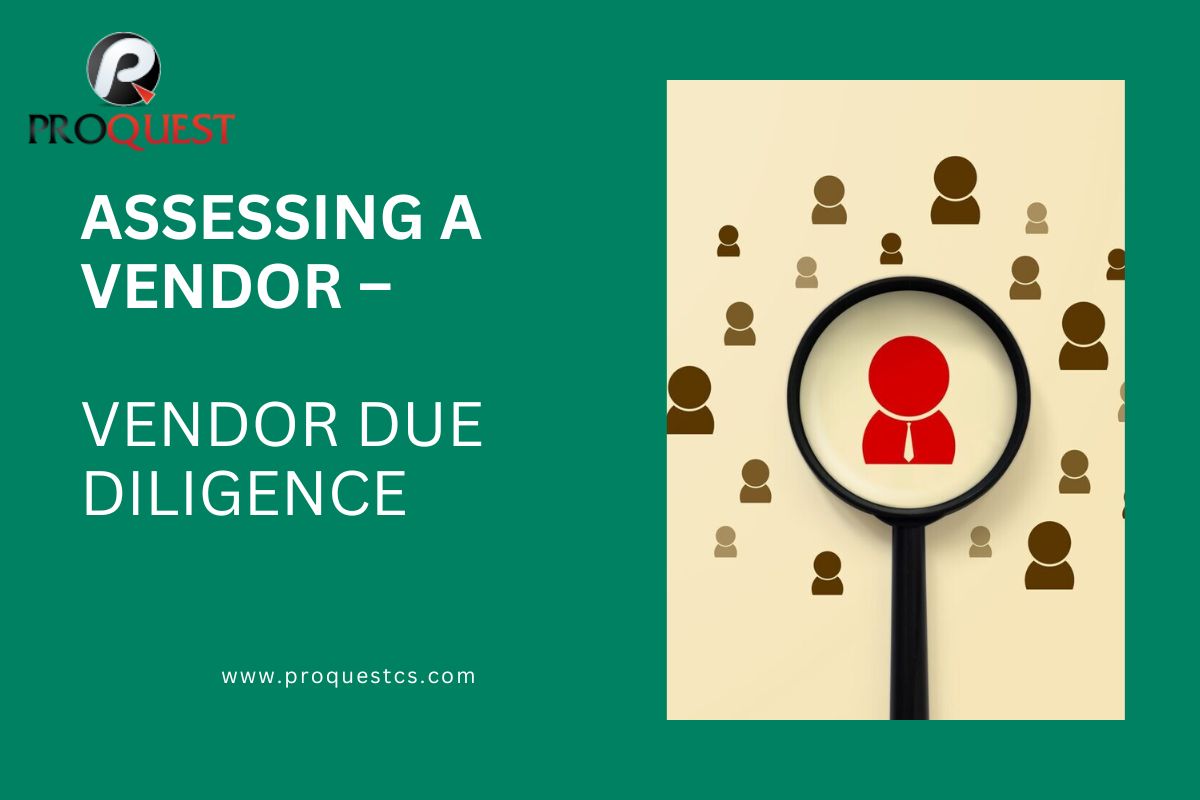
Assessing vendors involves finding out all the necessary details about them that could have an impact on a prospective business.
This is where Vendor Due Diligence comes into the picture.
A vendor is reviewed thoroughly on various parameters like the nature of their business, incorporation documents, the possibility of financial fraud, legal status, and cash flow.
Read More – Top Vendor Management Challenges and How to Overcome Them
Why Vendor Due Diligence?
To engage with other businesses, you need to be certain whether their goods and services are genuine or not.
It is like providing the buyer or investor with a seal of trust saying that this vendor will not be much of a liability to them.
Moreover, it helps vendors to paint a clear picture of what kind of risks they can fall into and make decisions about their assets.
Do you know about KYC- Find out here
7 Vendor Due Diligence Practices to Rely On
Here are our top picks for the best Vendor Due Diligence practices that should be done for any new vendor you are planning to engage with.
1. Gathering and Reviewing of Business and Financial Information
Collect every single piece of information about the prospective vendor starting from financial stability to employee conduct. Make sure to go back to those who have recommended the vendor. A proper understanding of the organization is a must.
2. Operational Risks to Be Noted
It is necessary to understand that there are chances where the vendor could experience a data breach. Strategies and Plans of Action should be planned out for any such occurrences in future accordingly.
3. Legal Risks
Vendors have access to all of the information for the company or organization they’re providing their services to. With such information, the company is vulnerable to data leakage. Hence, there has to be a thorough assessment of all the legal risks.
4. Analyze Risks in Cybersecurity
Apart from Operational and Legal Risks, the company must also look into the cybersecurity issues beforehand and decide whether they work with the vendor or not.
5. Prioritization of Risk Profiles
Vendors have to be under scrutiny all the time because of all the information they hold. To cut down on the risks mentioned above, they have to be on a tight watch.
6. Constant Monitoring of Vendor Risks
When a clear picture of the risks has been made as told previously, to minimize the risks, they (vendors) have to be observed always.
7. Automation of The Questionnaire Process
The company has to invest in impartial third-party software to view all inside information of the vendor and conclude whether they are fit to work for the company or not.
When Do You Perform Vendor Due Diligence?
How to streamline the process?
Always begin early. Identifying the potential red flags early in the process helps in saving the time and gives the target company to correct the issues if any. Getting early also enables the company to arrange the documents in place at the right time and lines up the communication lines between the deal's team and the vendor company.
Ensure proper workflows and communications are in place –
Confirm whether all the documents are sorted appropriately.
Cross check if all the documents were thoroughly reviewed to identify the red flags if any.
Any information that needs to be redacted, similar as for nonsupervisory or compliance- related reasons (perhaps for the GDPR (General Data Protection Regulation)), has been duly handled.
Vendor due diligence from professional providers
Every business is expanding with greater emphasis on partnerships and alliances. Hence setting the right tone with vendors is an advantage for the business. Automated and robust 3rd party solutions help organizations to strengthen and smoothen the end-to-end 3rd party due diligence program for risk assessments and information management.
In the pool of vendors, finding and working with the right vendor for the business is the challenging aspect. Proquest is equipped with cutting-edge technology tools to carry out
business due industriousness across diligence in a quick, cost-effective, and effective way. This helps businesses develop a better understanding of their merchandisers, and gain perceptivity on strengths, sins, and openings with the mates and alliances. With seller due industriousness, hiring the right seller becomes hassle-free.
Avail the best Vendor Due Diligence Services only at Proquest